
What does exercise being difficult have to do with managing pain?
No moderate amount of discomfort, no moderate amount of gain over time.

Tl;dr: The primary reason that exercise is useful is because it is hard. It challenges us, and thereby makes us more mentally, physically, and systemically resilient. Everything else is secondary.
That’s a bold statement, Tyler, care to explain more?
Oh boy howdy, do I ever.
Most people don’t like exercise. I don’t blame them. By and large it’s uncomfortable, time consuming, and inconvenient. But it’s a thing most of us do because we want The Result, which is usually something like bigger muscles, less pain, or a cool trick that we can show off at parties or on social media.
No judgment, I’m not above any of those desires myself.
There is nothing wrong with wanting a result. In fact, the desire for meaning is one of the most potent influences over the success of any injury/pain intervention. In physical therapy they talk about meaningful activity: physical activities that have personal relevance to the patient.
In exercise, meaningful activity is usually related to our desired result (big muscles, cool tricks, less pain, etc). This is great, but it can also overshadow the primary benefit of exercise: small, controlled dosages of stress that create movement confidence and help the body become more resilient over time.
Greg Lehman is a physiotherapist and educator who talks a lot about pain. He uses a cup analogy to talk about the complex, multifactorial nature of pain. The short version is that there are a lot of factors that influence pain, not just tissue damage. Things like lack of sleep, anxiety, work, relationships, load management (how much exercise we’re doing) can all influence the presence of and frequency with which we experience pain.
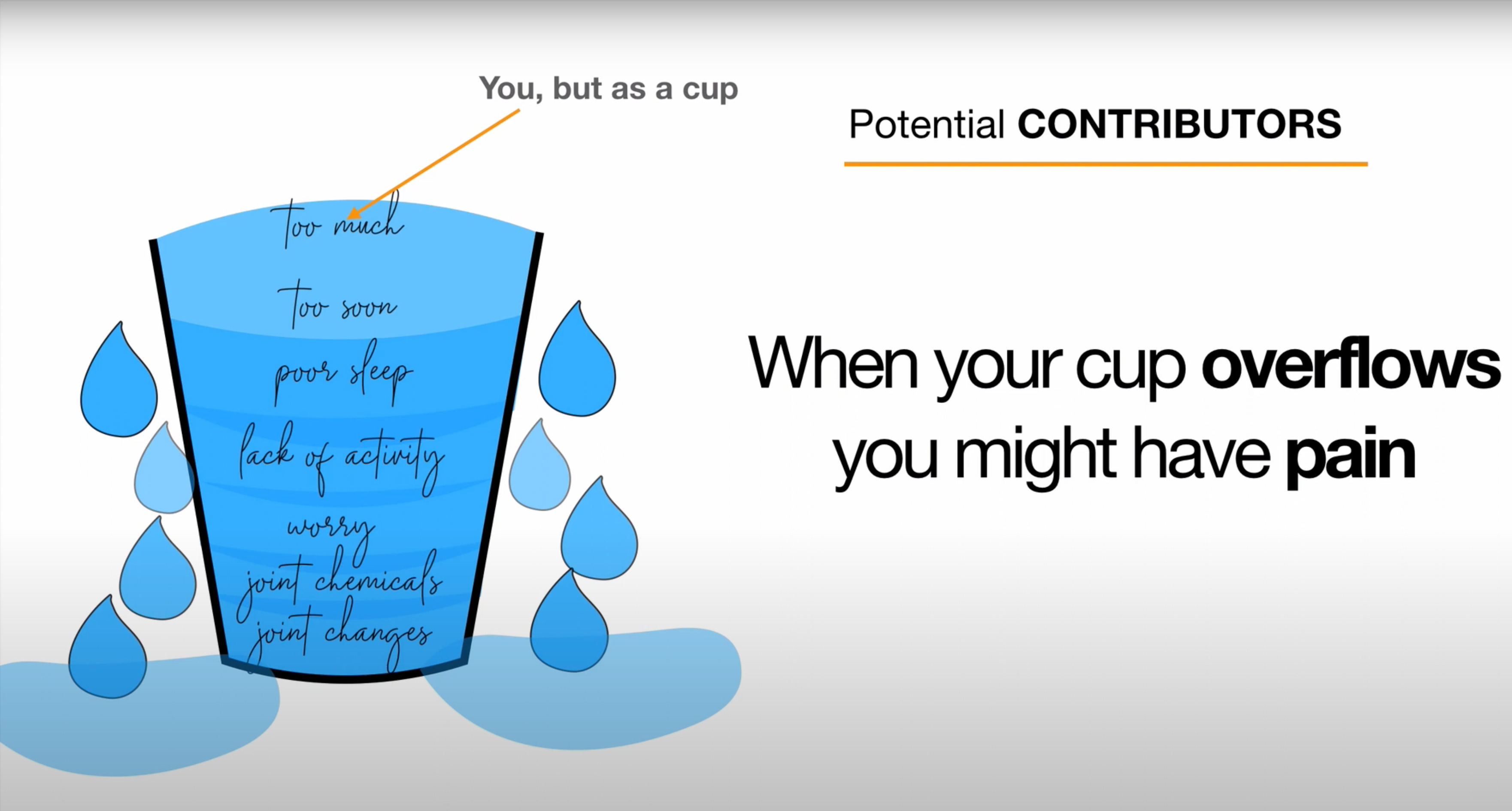
If you’d like to learn more, you can watch a short video here.
The point is, we know one thing: when the body experiences an appropriate amount of stress, it grows (in strength, resilience, capacity, etc) to resist further stress in the future. There are certain stressors we can’t entirely disappear (work, relationships, mental health conditions, the state of the world), but there are others that we can manage to increase our capacity (exercise, nourishing eating, sleep, self-care in whatever form works for us).
It’s through these manageable stressors that we can build a bigger cup so that when we experience these stressors we cannot control, we have more space for them.
Exercise is a stress. That’s good.
Exercise is hard. That’s good, too.
Hopefully it’s not hard in that it’s scary, takes place in an uncomfortable place, has lots of mental and emotional triggers, stuff like that—that’s not helpful stress. But in a place that feels comfortable and accepting to you, surrounded by people who support you (virtually or physically), and from a reasonable safe and secure mental/emotional state, exercise can be a really positive way to dose yourself with slight discomfort in order to become more resilient to future stress.